


Most people who’ve been through a real estate transaction, buying, selling, renting, or investing, can point to at least one moment where they wish they had known something sooner. Not after the inspection. Not at the closing table. Before any of it.
That moment usually doesn’t come with a warning. It arrives quietly, buried in a document you didn’t read closely enough, or in a conversation that never happened because nobody thought to have it.
The information existed. It just never came up.
“The things that catch people off guard in real estate are rarely surprises. They’re just things nobody brought up in time.”
The flood zone you didn’t think to ask about
You found the house. The price works, the location is right, and the layout is exactly what you pictured. Nobody mentioned the flood zone designation. Why would they? It’s not a defect; it’s a classification. But that classification is about to add several hundred dollars a month to your insurance premium, which changes what you can actually afford.
That’s not information that hides. It’s publicly available. It just doesn’t come up unless someone brings it up early enough to matter before you’re emotionally committed to a property and recalculating budgets under pressure.
The HOA assessment that was already decided
The seller is not required to disclose every pending assessment in every situation. Some are still in discussion. Some were voted on last month. You’ll find out eventually, but eventually might be the day after closing, when the assessment is yours.
A single question asked at the right time, before the offer, not after, can surface information that changes everything about the deal. That question has to come from someone who knows how to ask it.
The repair that everyone decided was minor
Inspection reports are long. They’re also written by inspectors, not contractors, which means the language is often more cautious than alarming. A note about “moisture detected near the base of the exterior wall” doesn’t sound urgent. Two years later, when the remediation estimate arrives, it reads very differently.
Some items on an inspection report are genuinely minor. Others are minor-sounding with major implications. Knowing which is which, and knowing what questions to ask before accepting that distinction, is the difference between a good transaction and a costly one.
“The question you didn’t know to ask is usually the one that mattered most.”
The timeline that was always too tight
Closing dates are agreed upon and then treated as fixed, even though they’re often anything but. Lenders get backed up. Title searches surface old liens that take time to clear. Inspections lead to re-inspections. When a timeline has no buffer, every delay becomes a crisis, and crises in real estate tend to be expensive.
A closing date that felt comfortable when you negotiated it can start to feel very different when you’ve already given notice on your lease, scheduled the movers, and the lender just asked for one more document they forgot to mention three weeks ago.
The conversation that felt unnecessary at the time
None of the situations above is unusual. They happen in ordinary transactions to people who did everything right, hired an agent, got pre-approved, did the inspection, and read what was put in front of them. They just didn’t know what they didn’t know.
The conversations that prevent them are not complicated. They’re just easy to skip when everyone is excited, and the deal is moving, and nobody wants to be the one who slows things down.
But slowing down for the right conversation at the right moment is almost always cheaper than the alternative.
What to do with this
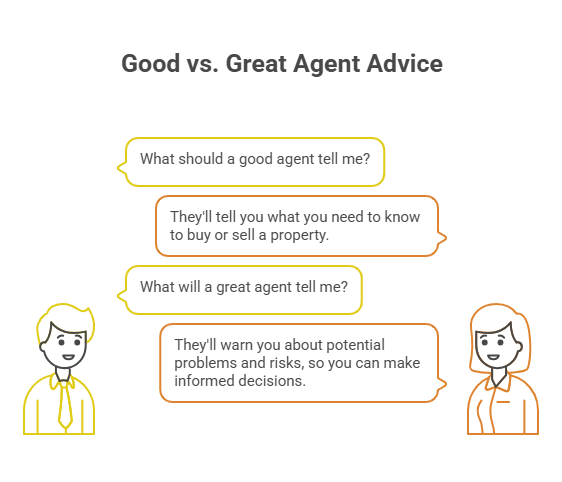
Before you get too far into any real estate decision, buying, selling, renting, or investing, ask the person you’re working with the uncomfortable questions. What could go wrong here? What aren’t we talking about? What have you seen happen in situations like this?
The answers will tell you a great deal. Not just about the transaction, but also about who you’re working with.