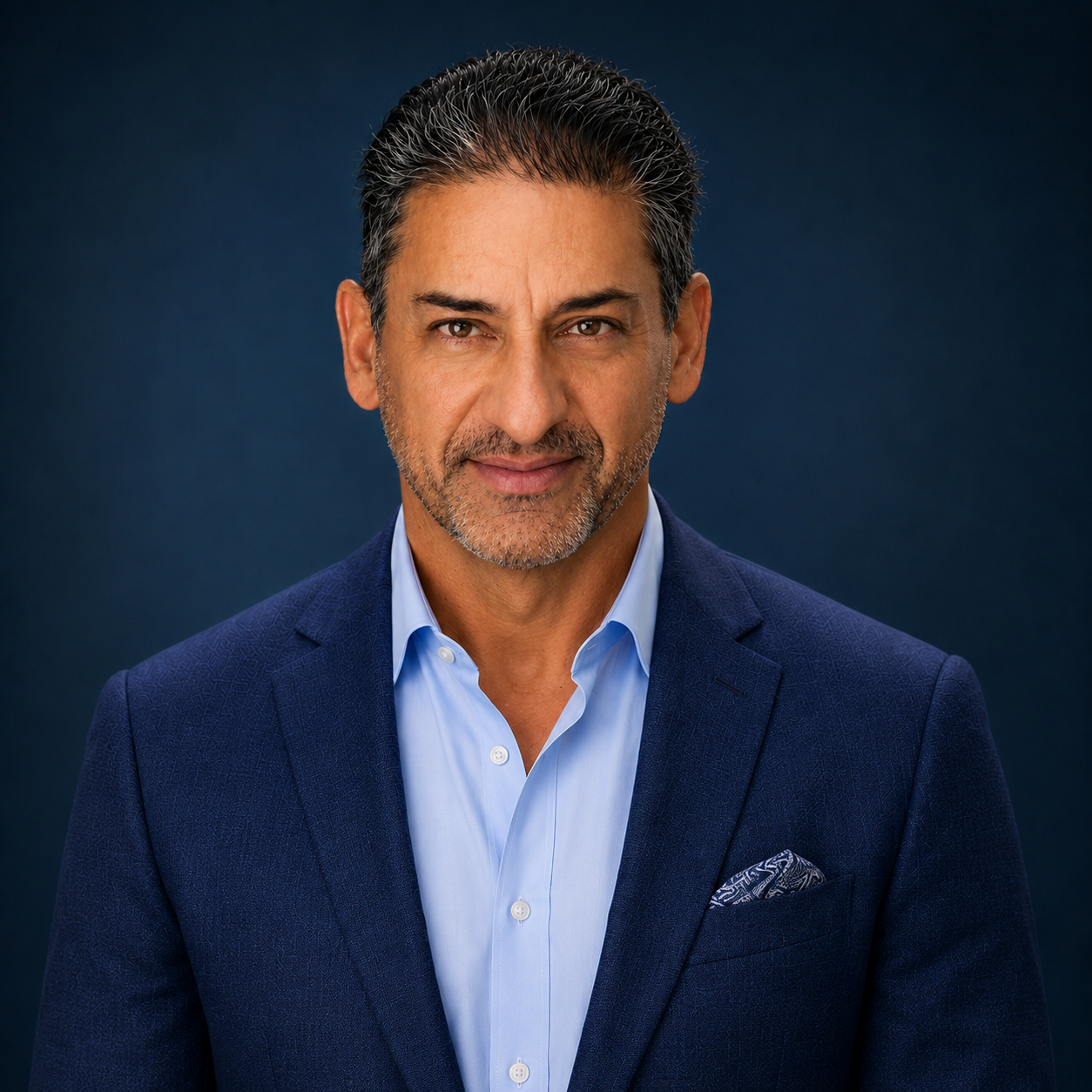
I got my real estate license in 2002. I was twenty-something years old, working in a market I barely understood, in a city that was still figuring out what it wanted to be. South Florida has changed enormously since then. The skyline is different. The demographics are different. The money flows are different. The technology is completely different.
But the fundamentals have not changed at all. People still buy and sell real estate for the same handful of reasons. They still make decisions with their emotions and justify them with numbers. And they still need someone they can trust to guide them through one of the largest financial decisions of their lives. Twenty-four years in one market has taught me that more clearly than anything else.
I have seen three market cycles from the inside.
When I started, South Florida was in the middle of a run. Values were climbing. Everyone was buying. It felt like the market could only go in one direction. Then 2008 happened. I watched neighborhoods I knew lose 40, 50, sometimes 60 percent of their value in two years. I watched families walk away from homes they had saved for their entire lives. I watched investors who had overextended lose everything.
That period taught me something that no licensing course ever could: real estate is not just a financial instrument. It is where people live. It is where their children grow up. It is tied to their sense of security and identity in ways that no other asset class touches. When it goes wrong, it goes very wrong for the people involved. Not just on paper.
I also watched South Florida recover in a way that few markets did. By 2013, values in many neighborhoods had climbed back. By 2020, we were in another run that brought values to levels that would have seemed impossible in 2009. And then the pandemic-era surge created a market so compressed and competitive that buyers were waiving inspections, paying hundreds of thousands over asking, and closing in 10 days on properties they had never physically seen.
"Real estate is not just a financial instrument. It is where people live. It is where their children grow up. When it goes wrong, it goes very wrong for the people involved. Not just on paper."
Every market cycle reveals a different truth about human behavior.
In a rising market, buyers become reckless and sellers become arrogant. In a falling market, sellers become desperate and buyers become paralyzed. In a flat market, everyone pretends to be patient while privately hoping the other side will blink first. The numbers change. The psychology does not.
What 24 years has given me is the ability to recognize which market I am actually in versus which market my clients think they are in. Those are often two very different things. A buyer who experienced the 2021 frenzy and is still operating with that fear of missing out in a 2024 market where inventory has returned and sellers are negotiating again is going to overpay. A seller who bought in 2020 at the bottom and thinks they can ask 2022 prices in 2024 is going to sit on the market and feel increasingly frustrated.
One of the most valuable things a broker does is calibrate expectations to reality. Not to what the client hopes for. Not to what makes the transaction easier. To what the data and the market are actually saying right now.
South Florida is one of the most international markets in the world.
This is not a talking point. It is a daily reality that shapes every transaction in this market in ways that are not obvious until you have been doing this for a long time. I have represented buyers from Venezuela, Colombia, Argentina, Brazil, Mexico, France, Israel, Russia, China, Canada, and dozens of other countries. I have worked with first-generation immigrants buying their first home in America and with multigenerational families consolidating wealth into South Florida real estate as a hedge against political and economic instability at home.
Each of these groups brings different motivations, different risk tolerances, different negotiating styles, and different relationships with the concept of ownership itself. A Venezuelan buyer who has lived through expropriation thinks about property ownership in a fundamentally different way than an American buyer who has never questioned the security of their assets. Understanding that difference — and adjusting how I communicate, advise, and structure the transaction accordingly — is part of what being bilingual and bicultural in this market actually means.
Speaking Spanish is a tool. Understanding the cultural context behind the language is the actual skill. South Florida demands both.
The deals that fall apart almost never fall apart for the reasons people think.
People assume deals die because of price disagreements or inspection issues. Those are the surface reasons. The actual reasons almost always come back to trust. Someone on one side of the transaction stopped trusting that the other side was operating in good faith. A communication gap created a misunderstanding that hardened into a position. An agent on one side or the other was more interested in protecting themselves than in solving the problem.
After 3,000 transactions, I can feel a deal getting fragile before it actually breaks. There is a change in the tone of the messages. A delay in responses that means something. A request that seems reasonable on the surface but signals an underlying anxiety. These are the moments when a broker earns their fee — not by filling out paperwork, but by recognizing what is actually happening and addressing it directly before it becomes a dead deal.
I have saved transactions that everyone else had written off. I have also let transactions die that should have died. Knowing the difference between a problem that can be solved and a situation that has become genuinely untenable for one of the parties is one of the most important skills in this business. It only comes from experience.
"After 3,000 transactions, I can feel a deal getting fragile before it actually breaks. These are the moments when a broker earns their fee — not by filling out paperwork, but by recognizing what is actually happening."
Money changes how people behave, but it does not change what they need.
I have represented buyers purchasing a $180,000 condo in Doral and buyers purchasing a $4,000,000 waterfront estate in Coral Gables. The numbers are completely different. The emotional experience is almost identical. Both buyers are making a decision with real consequences. Both are placing trust in me to guide them through a process they do not fully understand. Both need clarity, honesty, and someone who will tell them the truth even when the truth is inconvenient.
What changes at higher price points is not the nature of the need. It is the sophistication of the questions and the tolerance for ambiguity. A buyer at $4,000,000 has usually done this before. They know what due diligence looks like. They have attorneys reviewing the contract and accountants analyzing the tax implications. They are not just trusting a broker — they are assembling a team. The broker's role is to be the most informed person on that team about the specific transaction at hand.
At every price point, the core of the relationship is the same: the client needs to believe that I am working in their interest, not mine. That belief is earned through consistency over time, not through a sales pitch at the first meeting.
The best clients I have ever had were the ones who asked the hardest questions.
The clients who challenge me, push back on my advice, ask me to justify my recommendations with data — those are the clients I respect most and the ones I do my best work for. A client who accepts everything I say without question is not trusting me. They are abdicating. And that is a different problem.
The conversations I remember most from 24 years in this business are not the ones that went smoothly. They are the ones where a client pushed back hard on something I was recommending, forced me to think more carefully, and either changed my mind or deepened my conviction. Both outcomes made the transaction better.
If you are going to work with me, I want you to ask me the hard questions. What do you know about this building that I do not? What does this neighborhood look like in five years? Why does your recommended offer price differ from the Zestimate by $80,000? I will answer all of it. And if I do not know, I will tell you that too.
What I know now that I did not know in 2002.
I knew the mechanics of a transaction in 2002. I did not know how to read people. I did not understand that most of what happens in a real estate transaction is not about real estate — it is about the fears, hopes, pressures, and histories that each party brings to the table. A seller who seems unreasonably attached to a price is sometimes grieving the end of a chapter of their life. A buyer who keeps stalling on making an offer is sometimes terrified of making the wrong decision because of what happened last time.
Understanding those undercurrents does not mean manipulating them. It means acknowledging them, creating space for them, and working around them with patience rather than pressure. A transaction that closes because a client felt genuinely understood is a relationship that generates referrals for years. A transaction that closes because someone was pushed into it is a one-time event that sometimes ends badly.
Trust, I have come to believe, is not built in the moments when everything goes well. It is built in the moments when something goes wrong and you handle it the right way. Every difficult transaction I have navigated in 24 years has been a deposit in a trust account. That account is what my business runs on.
Why I am still here after 24 years.
People ask me sometimes why I have stayed in South Florida real estate for so long. Why not expand to other markets? Why not move into development or investment full-time? The honest answer is that I find this work genuinely interesting, and I find this market genuinely fascinating, and I have not run out of things to learn.
South Florida is one of the few places in the country where global economic events show up in the real estate market almost immediately. When Venezuela destabilizes, I see it in Doral within months. When interest rates in Europe change, I feel it in the demand patterns for Miami Beach waterfront. When the Northeast goes through a tax-driven migration wave, I see it in the waiting lists for new construction in Boca Raton and West Palm Beach. This market is a lens on the world. I find that endlessly interesting.
And I find the work meaningful. Helping someone buy their first home in America. Helping a family upsize into the neighborhood they worked toward for a decade. Helping a seller close a chapter of their life with dignity and a fair price. These things matter. They matter more than the commissions, which is something I genuinely mean and that took me a few years to fully understand.
Reinaldo Gonzalez
Licensed Florida Broker since 2002 · Broker/Owner, InvesTeam Realty · Published author · Bilingual EN/ES
Reinaldo has closed over 3,000 transactions in South Florida across Miami-Dade, Broward, and Palm Beach County. He is a published author, keynote speaker, and the creator of the Trust Architecture Method.
Work with someone who has seen every market cycle
Let's talk about
what the market looks like right now.
Whether you are buying, selling, or just trying to understand what is happening in South Florida real estate, I am happy to have an honest conversation with no obligation.
Start the conversation →